

What Is the HSPT (High School Placement Test)?
Okay, so you're in 8th grade. You're staring down Catholic high school applications, and everyone keeps mentioning the HSPT. The High School Placement Test? It's basically the gatekeeper exam that over 400 Catholic and private high schools across the United States use to figure out who gets in and who doesn't.
Not gonna lie. This test matters.
The Scholastic Testing Service developed this thing back in 1955, and it's been making 13-year-olds nervous ever since. That's almost 70 years of the same exam format, which is kind of insane when you think about it. Like, we've had the internet revolution, smartphones, AI tutors, and somehow this paper test from the Eisenhower era is still the standard? Whatever. It works, I guess. It's a standardized admissions test for 8th graders checking whether you're actually ready for the academic rigor of a college-prep high school environment. Schools use it because an A in one middle school might mean something totally different than an A somewhere across town. The HSPT gives admissions committees objective data they can actually compare.
Why this test could determine your next four years
Here's the deal. Some schools treat your HSPT score like it's everything.
Others? They look at it alongside your grades, teacher recommendations, and that awkward admissions interview where you tried explaining why you want to attend their school. Either way, this test carries weight that can shape where you spend the next four years of your life.
High scores unlock merit-based scholarships worth thousands of dollars every year. I've seen kids get full rides based primarily on crushing this exam. Wild, right? Schools also use your results for class placement decisions. Score well and you might land in honors sections right off the bat. Score poorly? You could be explaining to your parents why you're not getting into your first-choice school.
Many institutions set minimum score thresholds. Fall below that line and your application might not even get a full review. Schools also use HSPT data to balance their freshman classes and make sure students are appropriately leveled from day one.
Breaking down the test format
The HSPT runs about 2 hours and 30 minutes of actual testing time. Though with instructions and breaks, you're looking at closer to three hours total. It splits into five main sections, and the pacing is brutal in some parts.
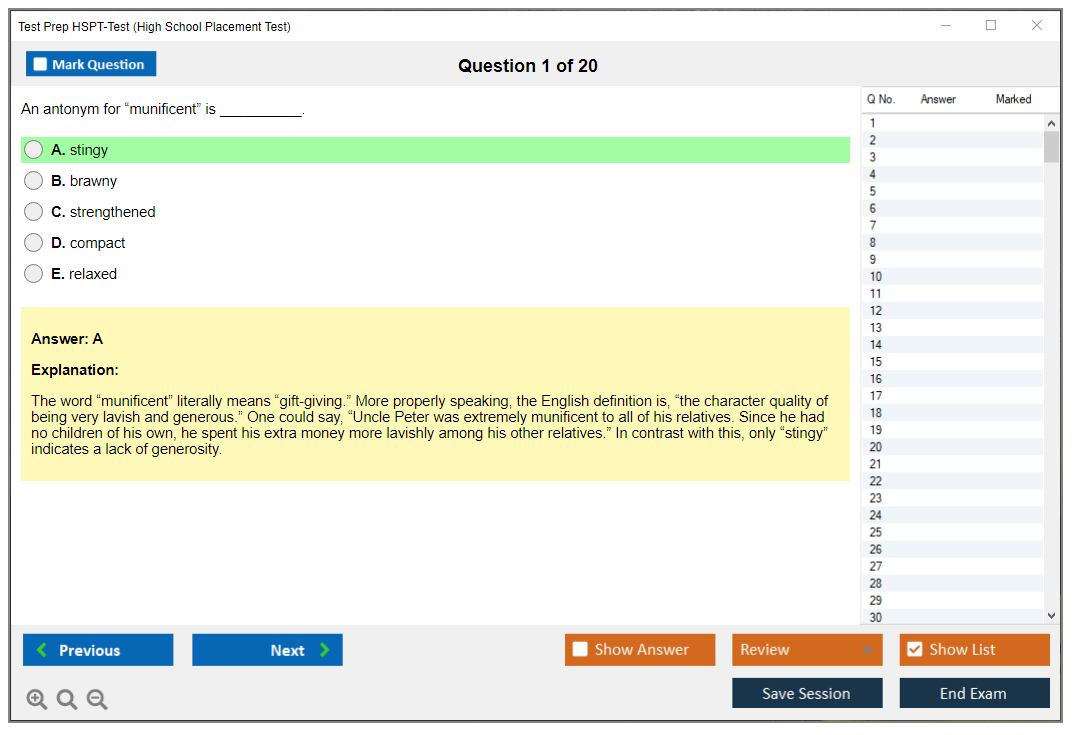
Verbal Skills hits you with 60 questions in just 16 minutes. Analogies, synonyms, logic problems, and verbal classification questions flying at you. That's less than 20 seconds per question. Zero time for daydreaming.
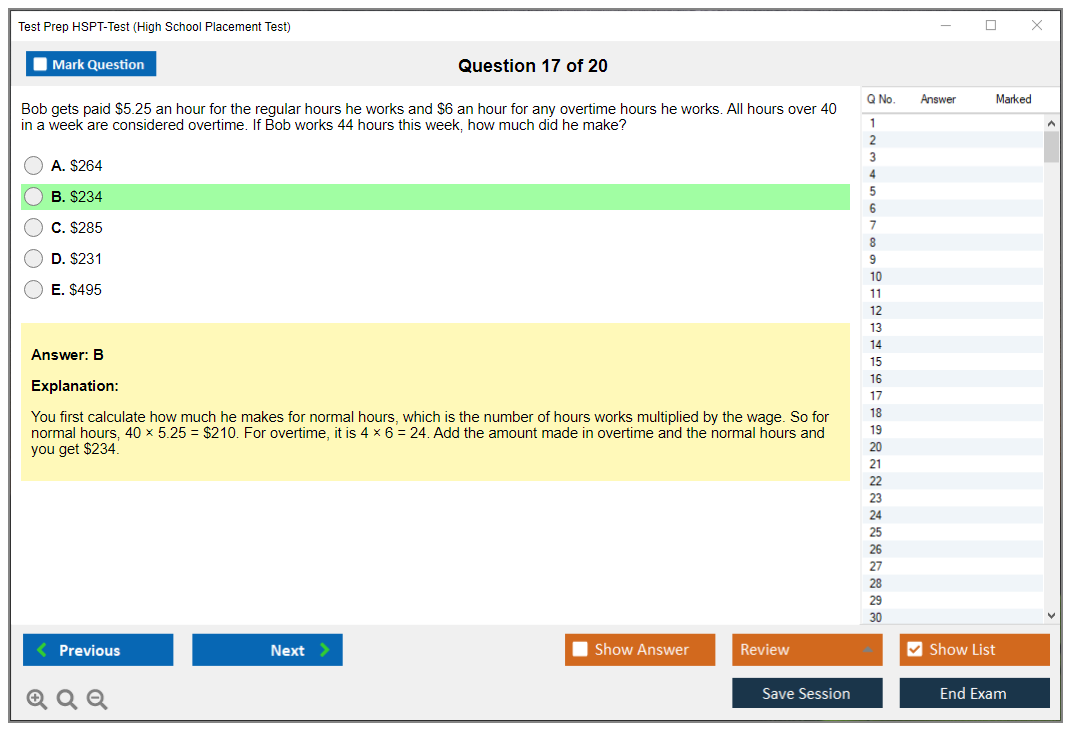
Quantitative Skills gives you 52 questions in 30 minutes. Number series, geometric comparisons, and problem-solving that doesn't rely on formal algebra. This section trips up loads of students because it tests mathematical reasoning more than calculation, which isn't what most middle schoolers practice.
Reading comprehension takes 25 minutes for 62 questions. You'll read passages and answer questions about them, plus tackle vocabulary-in-context items. Mathematics? That's the longest section at 45 minutes for 64 questions, covering everything from basic arithmetic through algebra and geometry fundamentals.
Language skills gets tested in 25 minutes with 60 questions on grammar, usage, punctuation, capitalization, and composition. Think of it like the grammar police came to your exam.
Some schools tack on optional sections. Science, Mechanical Aptitude, or Catholic Religion depending on what they want to evaluate. All questions are multiple choice with four or five answer options. There's no guessing penalty, so you should literally answer every single question even if you're just bubbling randomly in the last 10 seconds.
How it compares to other entrance exams
If you're also looking at non-Catholic private schools, you might encounter the SSAT-Test or ISEE.
The HSPT? Generally considered more curriculum-based and achievement-focused compared to those exams. The SSAT and ISEE lean harder into advanced reasoning and critical thinking, with more curveball questions designed to separate top performers from everyone else who's just prepared normally.
The HSPT includes that dedicated Language section testing grammar and mechanics. You won't find that exact format on the SSAT or ISEE, which is actually kind of refreshing if you're good at grammar rules. It's also shorter overall than most versions of those tests. Question formats are more predictable too. While the SAT-Test or ACT-Test that you'll eventually face in high school throw experimental sections at you, the HSPT is pretty straightforward about what you're getting.
Less emphasis on vocab that sounds like it came from a Victorian novel.
More emphasis on whether you actually learned your middle school curriculum, which seems fair.
When and where you'll take it
Testing typically happens in fall or early winter of 8th grade. October through January is the sweet spot. But here's the annoying part: there's no national test day. Each school or diocese sets its own date, which makes planning complicated. You might take it at the high school campus you're applying to, or at a designated testing center if your diocese runs consortium testing.
Consortium testing is actually pretty convenient. You take one exam and your scores get sent to multiple schools you're applying to. Registration goes through individual schools rather than some central agency, so you need to stay on top of each school's deadlines.
Most students only get one or two shots per admissions cycle, and that's it. Miss your test date and you might find a makeup option if you've got documented emergencies or conflicts, but don't count on it. This isn't like the GRE-Test or GMAT-Test where you can just schedule another attempt whenever you want.
What schools actually care about
Admissions committees use HSPT scores differently.
Some schools are super transparent about their cutoffs. "We typically admit students scoring above the 75th percentile." Others are maddeningly vague, which drives families crazy trying to figure out if they've got a real shot or they're just wasting application fees.
Scores help determine scholarship eligibility in a big way. A score in the 90th percentile might qualify you for a half-tuition scholarship. Hit the 98th percentile? You could be looking at a full ride. Schools also use results for honors placement decisions, so even if you're already admitted, your score determines whether you start in regular or advanced courses.
The test provides a common yardstick for comparing students from different middle schools, different states, even different educational systems. That kid who went to a tiny rural school and got straight A's? The HSPT shows whether those A's translate to the same achievement level as the straight-A student from a competitive suburban district.
Getting ready for this thing
HSPT test prep doesn't need to consume your entire 8th grade year. But you can't just walk in cold either. That's a recipe for disappointment. The students who do best treat it like a serious academic challenge requiring focused preparation.
Similar to preparing for the PSAT-Test, you need a mix of content review and timed practice that actually simulates test conditions. The math section covers material through basic algebra and geometry. If you haven't seen those topics yet in school, you need to learn them. The verbal sections require vocabulary building and practice with analogy patterns.
An HSPT practice test? Absolutely required. You need to experience the pacing pressure before test day arrives and you're sitting there in an unfamiliar classroom. That 16-minute Verbal Skills section feels completely different when you're actually watching the clock tick down.
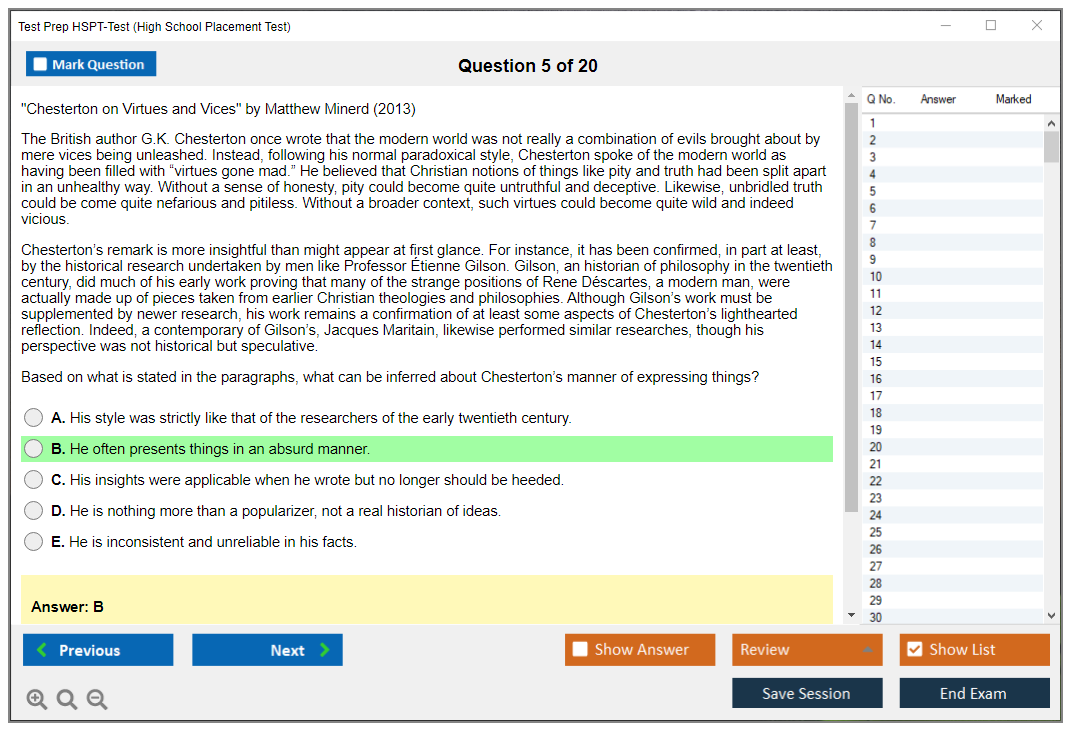
Reading comprehension practice should focus on working efficiently through passages without getting lost in details. The HSPT reading section moves fast. You can't afford to read each passage twice or you'll run out of time.
Most successful students spend 4-8 weeks on structured HSPT study guide work. Taking at least 2-3 full-length practice tests under timed conditions. HSPT math practice tends to be where students can make the biggest score improvements since it's testing specific skills you can drill, which is encouraging if math isn't your strongest subject naturally.
The scholarship exam prep for high school admissions is worth the time investment if you're serious about reducing the financial burden on your family over the next four years. We're talking potentially tens of thousands of dollars here.
HSPT Objectives: What the Test Covers
what this test is, really
The High School Placement Test's a standardized admissions test for 8th graders, used mostly by Catholic and private high schools. Schools use it to sort placement levels, compare applicants from different middle schools, and sometimes to hand out scholarship exam prep for high school admissions money. Not every school treats it the same, which is why families get confused fast.
Some kids treat it like "just another test." Big mistake. It's timed hard, it's multiple choice, and honestly, the pacing's the whole game, because a student who knows the content but reads slowly or double-checks everything can still run out of time and leave points on the table.
who takes it and why it matters
Most test takers are 8th graders applying to Catholic high schools, though some independent schools use it too. The score can affect admissions decisions, class placement (honors vs standard), and scholarship consideration. Look, even when a school says "we look at everything," they still like having a common number to compare students. It's human nature.
how the sections and timing usually work
The core HSPT's split into Verbal Skills, Quantitative Skills, Reading, Mathematics, and Language. Schools may add optional tests like Science, Mechanical Aptitude, or Catholic Religion. No calculator. Lots of questions. Tight clocks. This is why HSPT test prep matters more than people expect, because you're training speed as much as knowledge. Maybe more.
what the test covers, section by section
HSPT objectives are pretty consistent year to year. The test's trying to measure quantitative and verbal reasoning prep plus the practical school skills you're supposed to have by the end of middle school. Some of it feels like classroom content, some of it feels like an aptitude test, and that mix is exactly why doing at least one HSPT practice test early's so helpful.
verbal skills objectives
This section's 60 questions in 16 minutes. Yes, that's aggressive. The objective's vocabulary development, logical thinking, and relationship recognition, and it comes out in five main question types.
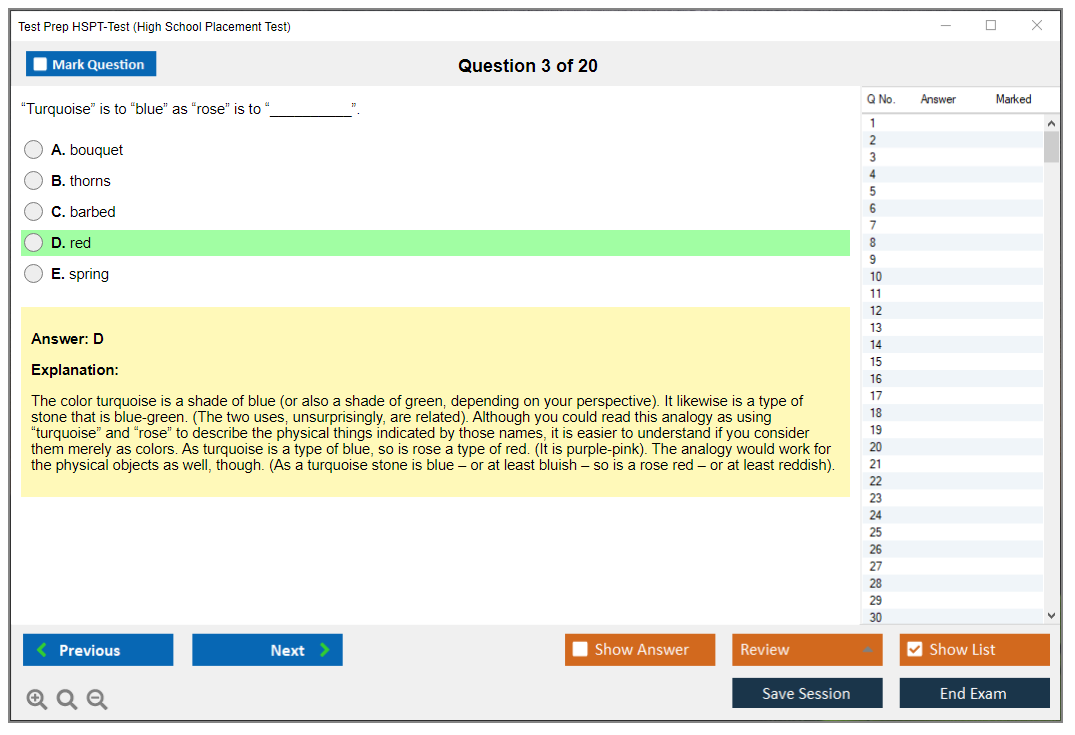
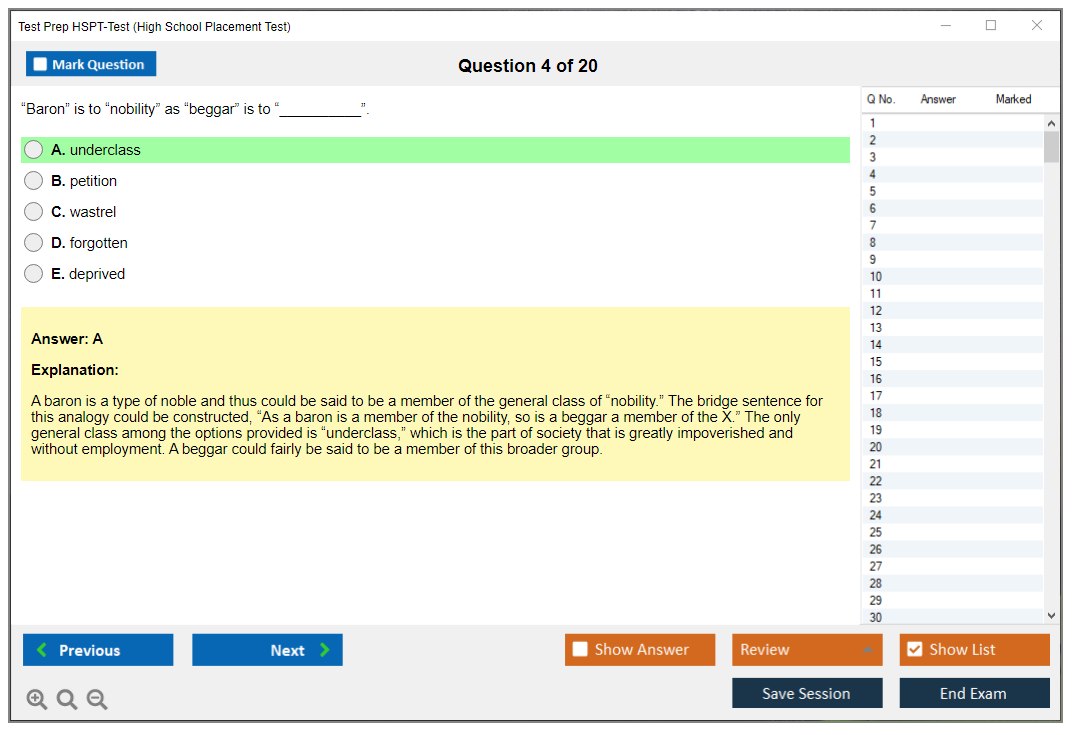
Analogies make up about 20. You're spotting relationships like teacher:school :: doctor:hospital, and the relationships can flip around on you fast. Part-to-whole's common, so's cause-effect, synonym, antonym, and function. The trap's picking an answer that "kind of relates" but doesn't match the same relationship type, and under time pressure kids start guessing by vibe. Don't. A good HSPT verbal skills practice routine's to name the relationship out loud in your head, like "place where they work" or "tool used for," then match that exact pattern. I mean, it sounds simple, but the number of students who skip this step and then wonder why they're missing half the analogies is wild.
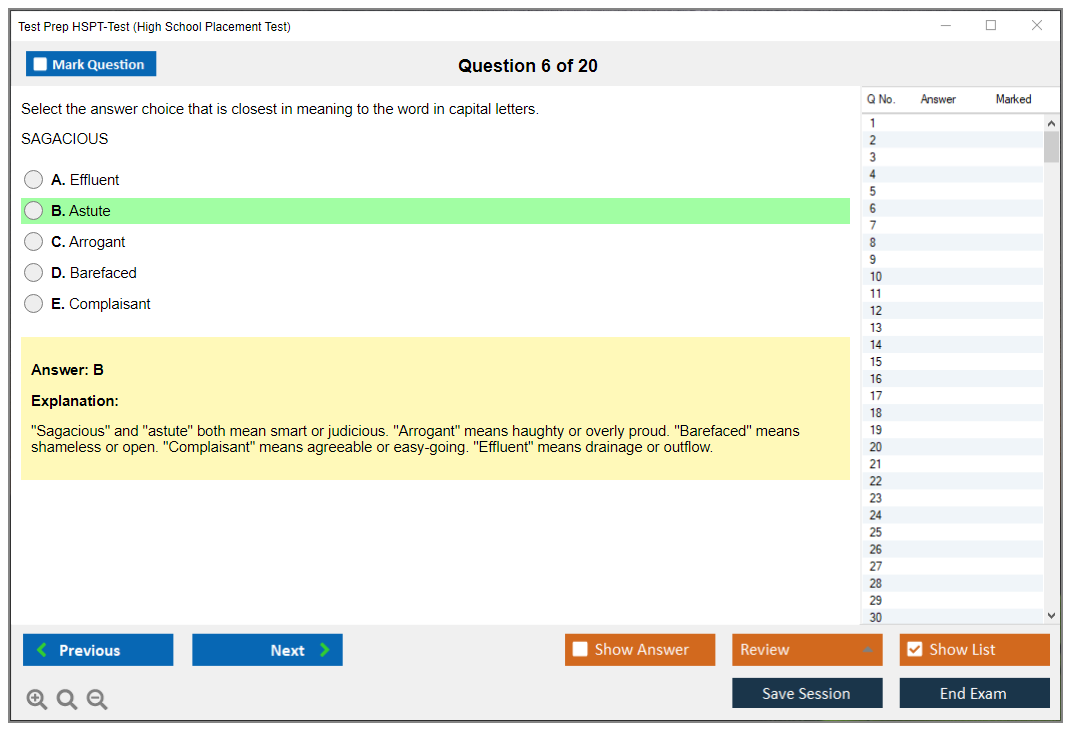
Synonyms (about 15). Straight vocabulary recognition from middle school reading and academic contexts. Not just "happy = glad" stuff. You'll see words that show up in textbooks and teacher talk, and the wrong options are often near-synonyms that are slightly off in tone, intensity, or usage. One weird but real tip from my own tutoring work's to read more nonfiction articles for two weeks, because kids who only read fiction sometimes know the story words but miss the academic ones.
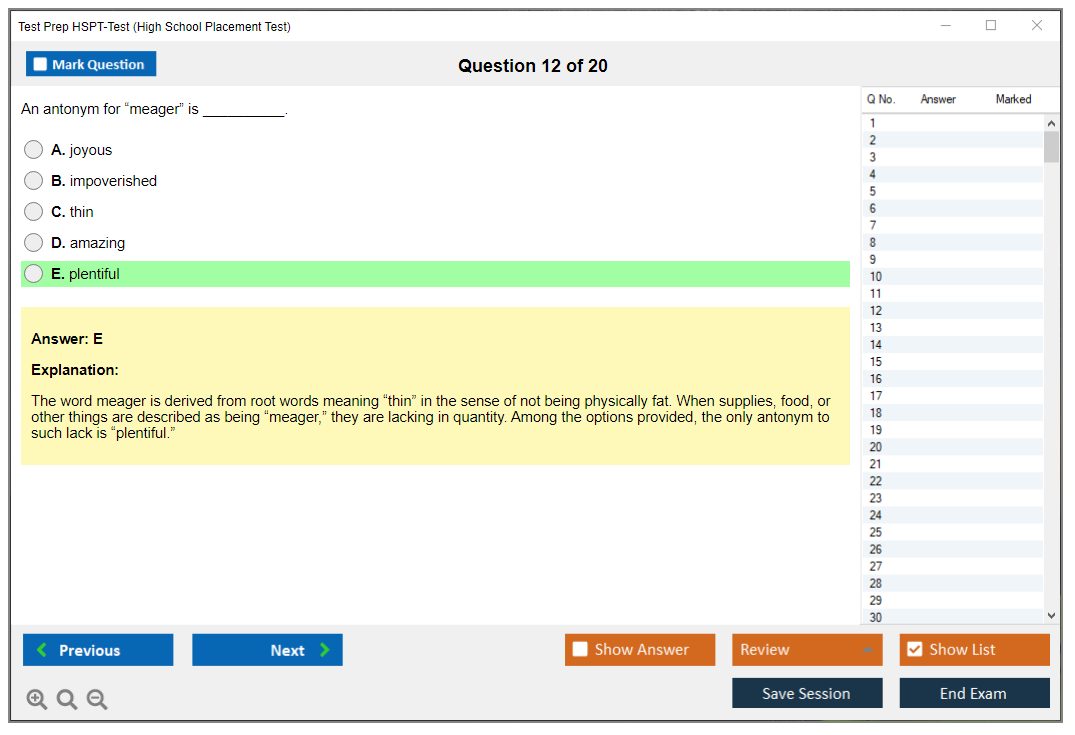
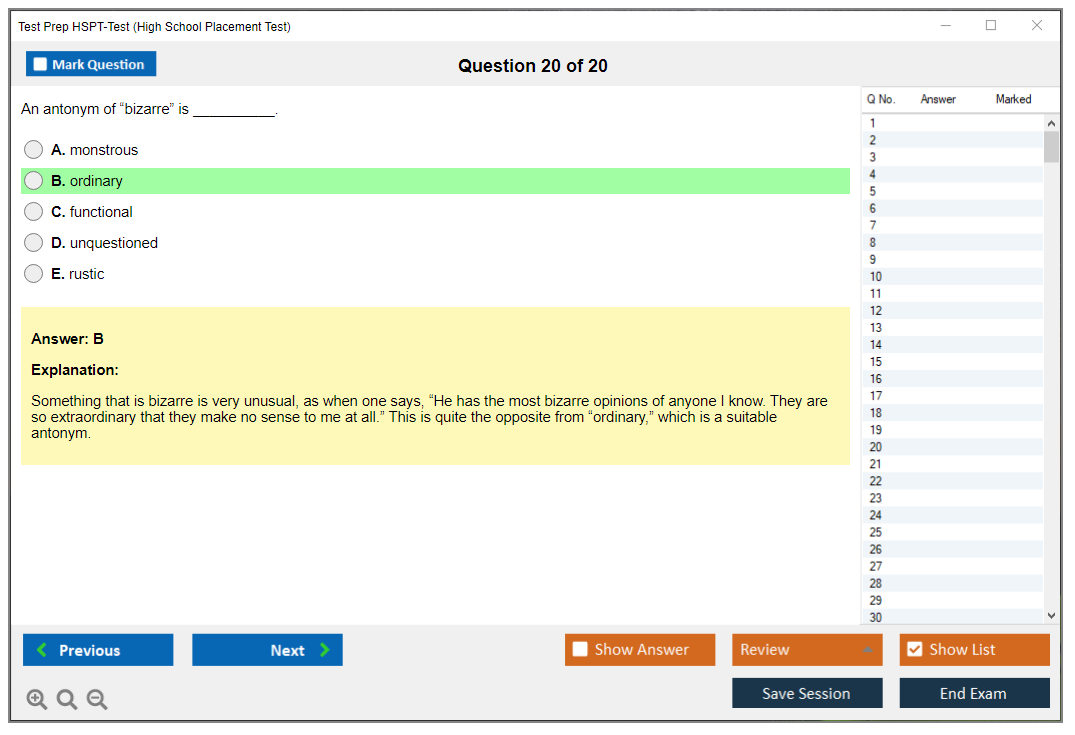
Antonyms (about 10). Same idea, opposite meaning. Watch for prefixes and roots. Also watch for "not X" answers that are too simple, because the real antonym might be a different word entirely.
Verbal logic (about 10). These are deductive reasoning questions where you decide which statement must be true given a set of conditions. Short sentences. Brain-bendy. If A implies B, and B implies C, what must follow. The best prep's doing lots of them timed, because you need to learn when to stop rewriting the whole puzzle and just test the answer choices quickly.
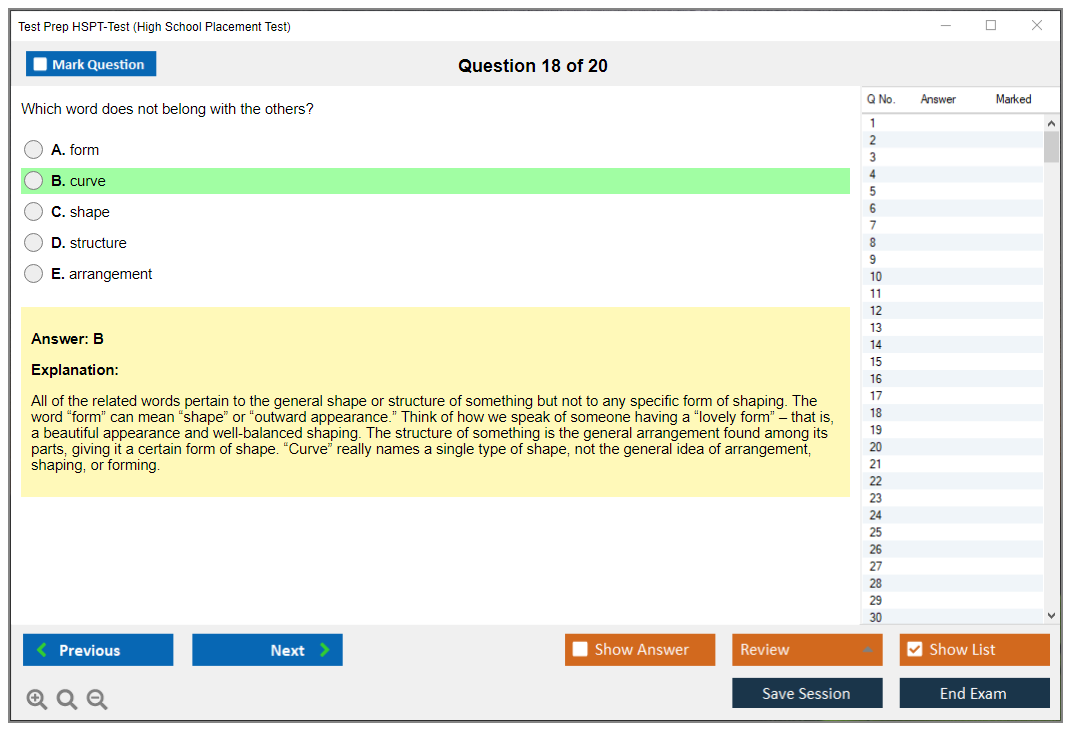
Verbal classification runs about 5. Pick the word that doesn't belong. Sounds easy. It isn't always. The group could be category-based, function-based, or even based on a shared attribute like "all are measurement units except one," so you've gotta figure the rule before you pick the odd one out.
quantitative skills objectives
Quantitative's the "math reasoning without full math" section. It's timed aptitude test practice for middle school students, and the goal's number sense, pattern recognition, and comparing magnitude fast. No calculator, and you usually can't afford to do long computations anyway.
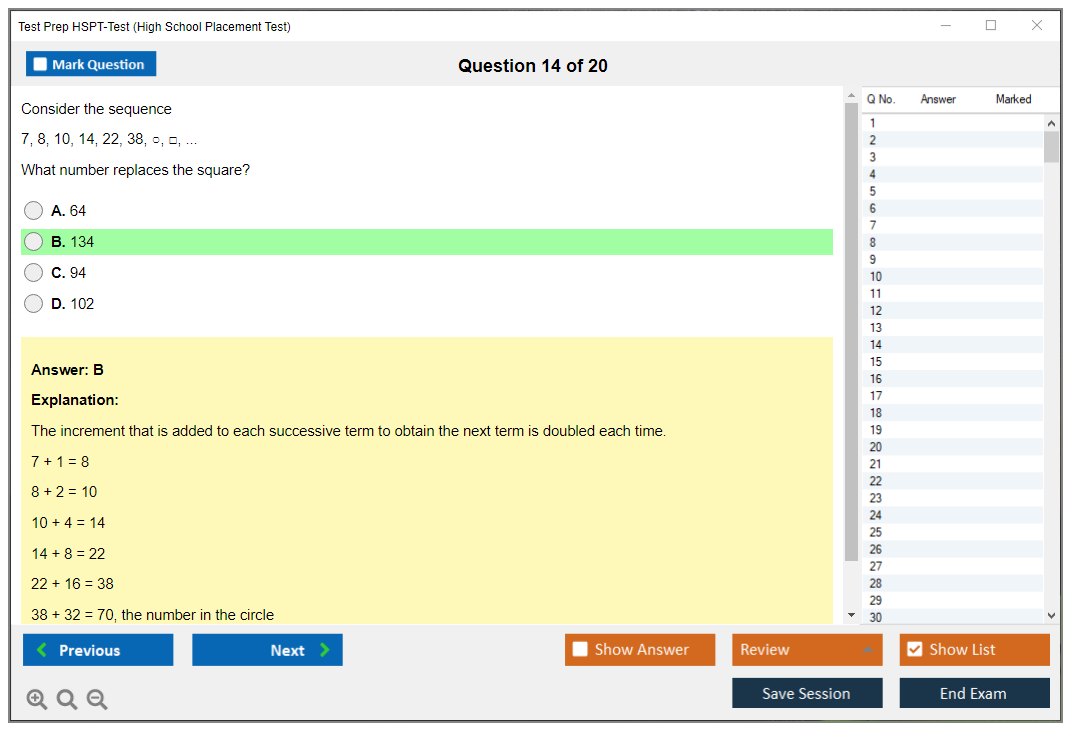
Number series (about 18). You identify the pattern and choose the next number. Some are arithmetic (add 3 each time), some are geometric (times 2), and some are multi-step like "add 1, add 2, add 3" or alternating operations. The big objective here's recognizing structure quickly, and honestly you get better by seeing a ton of series and learning common patterns, not by memorizing formulas. That's just how pattern recognition works in your brain.
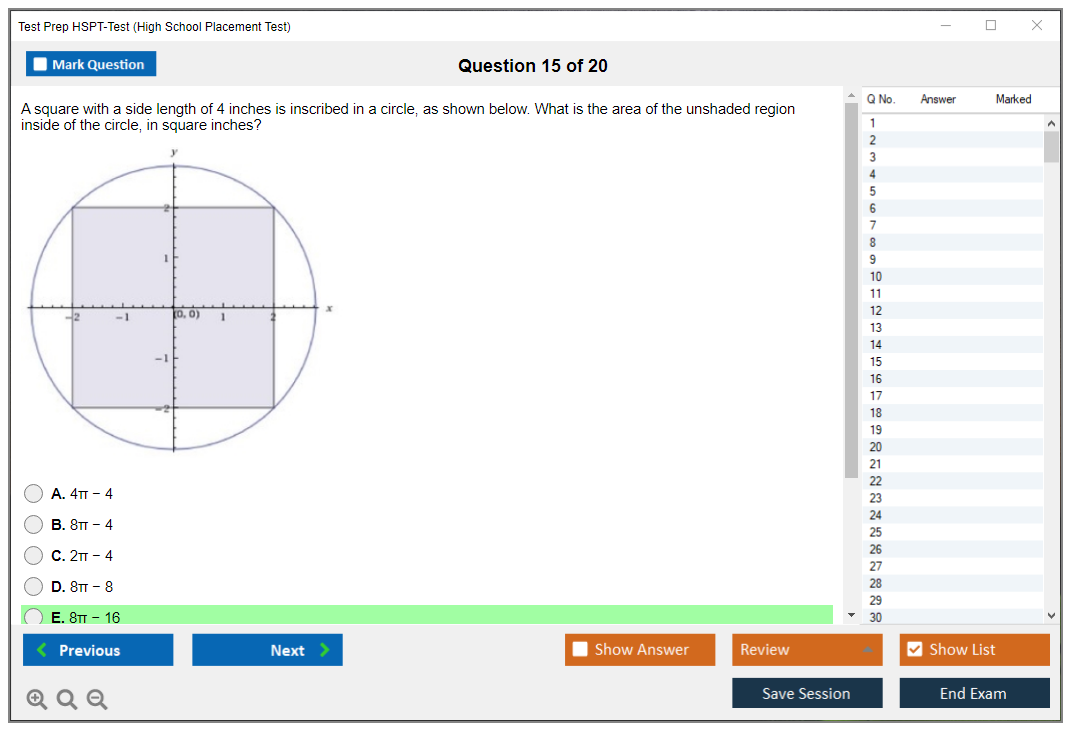
Geometric comparison (about 17). You compare areas, perimeters, or volumes visually with no calculations allowed. That wording matters. You're estimating and comparing shapes mentally, using symmetry, relative size, and basic geometry facts. If two rectangles've got the same perimeter, which's got more area, that kind of thing. This is where HSPT test tips and strategies really pay off, because a student who tries to calculate everything'll burn time and still make mistakes.
Non-geometric comparison (about 17). Compare numerical expressions without solving them fully. Think "which's bigger: 3/4 or 7/10" or "which expression's closest to 50." The objective's understanding relationships and magnitude, not grinding arithmetic.
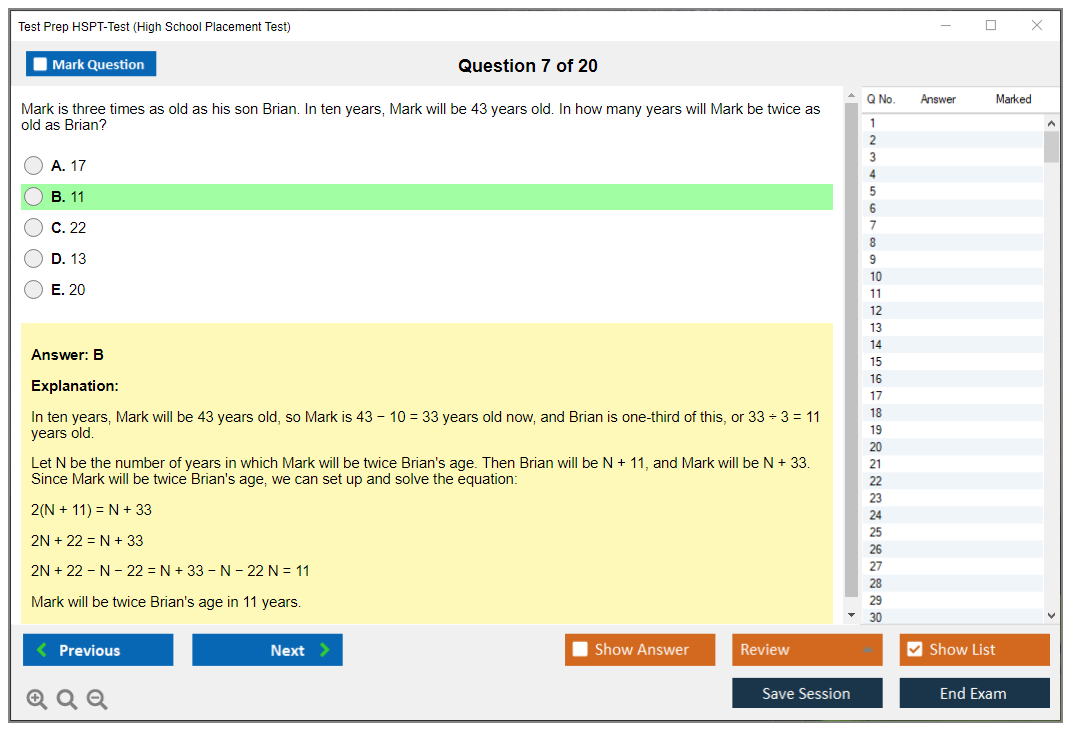
Number manipulation. These are word problems that push logical thinking more than traditional algebra. You might be able to set up an equation, but you can also often reason by testing values or simplifying the situation.
If you're doing HSPT math practice, don't only do computation drills. Do mental math, estimation, and comparison problems. That's the hidden curriculum here. The thing is, schools assume you've built number sense, not just memorized procedures. My sister used to tutor a kid who could factor polynomials in his sleep but couldn't estimate 18% tip at a restaurant, and he got wrecked by this section because he kept trying to write everything out.
reading objectives
Reading's 62 questions in 25 minutes. That works out to a very fast pace, and many prep programs estimate you need around 400 to 450 words per minute to finish comfortably, depending on passage length and how much rereading you do.
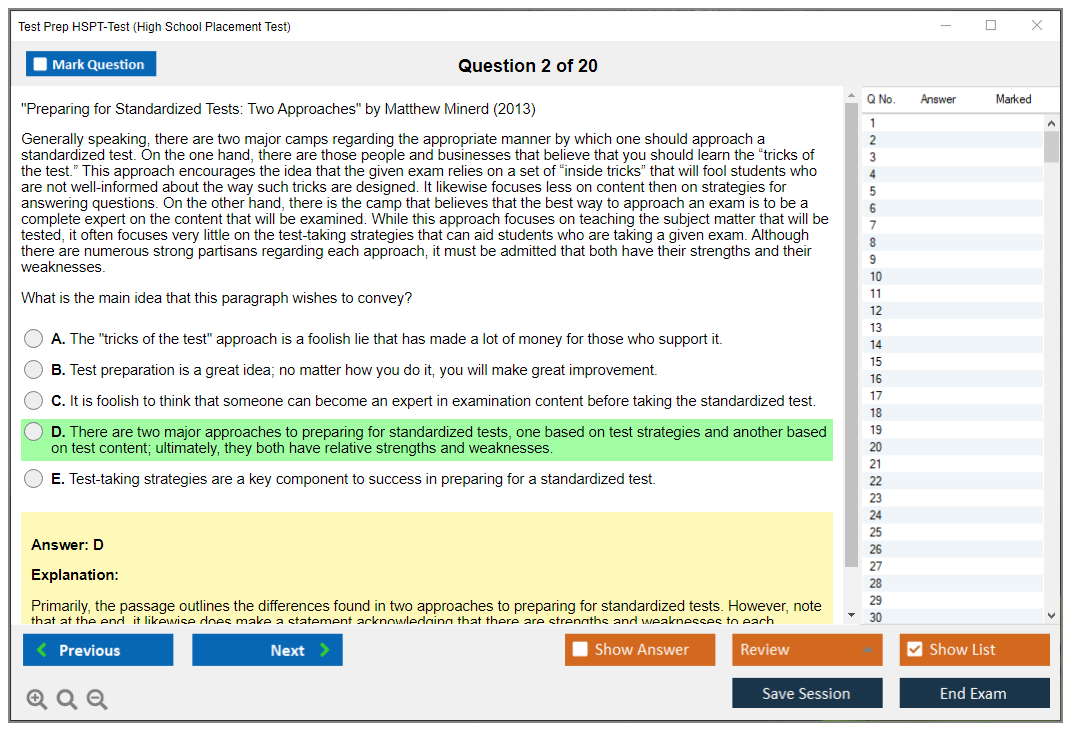
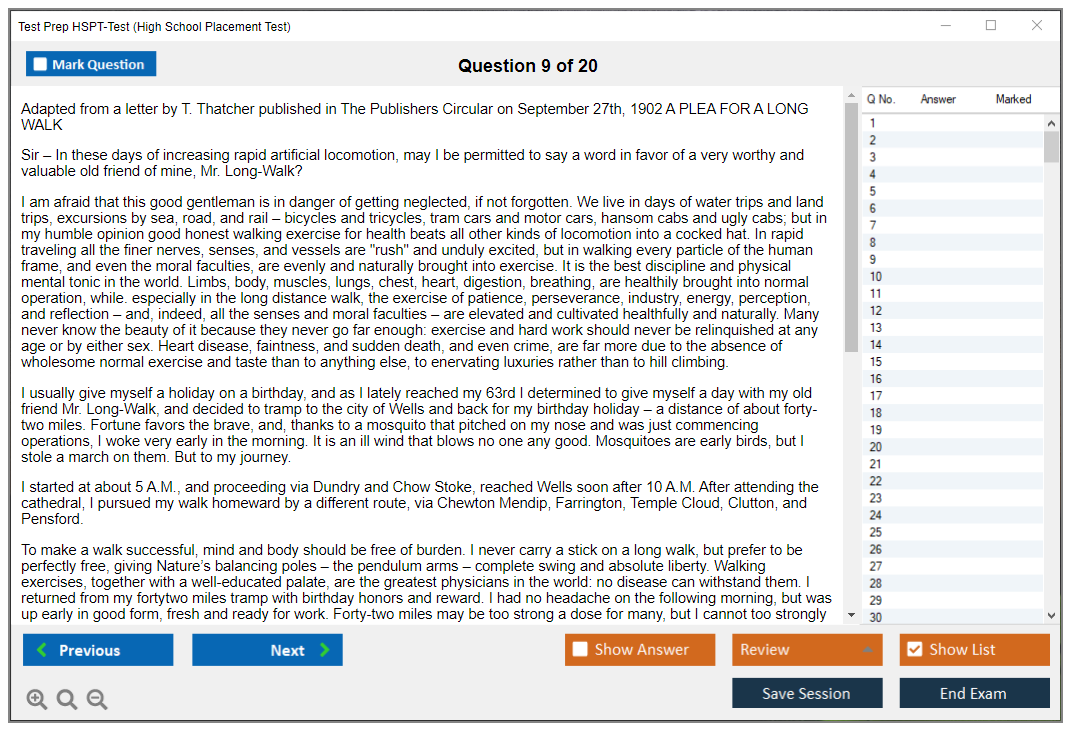
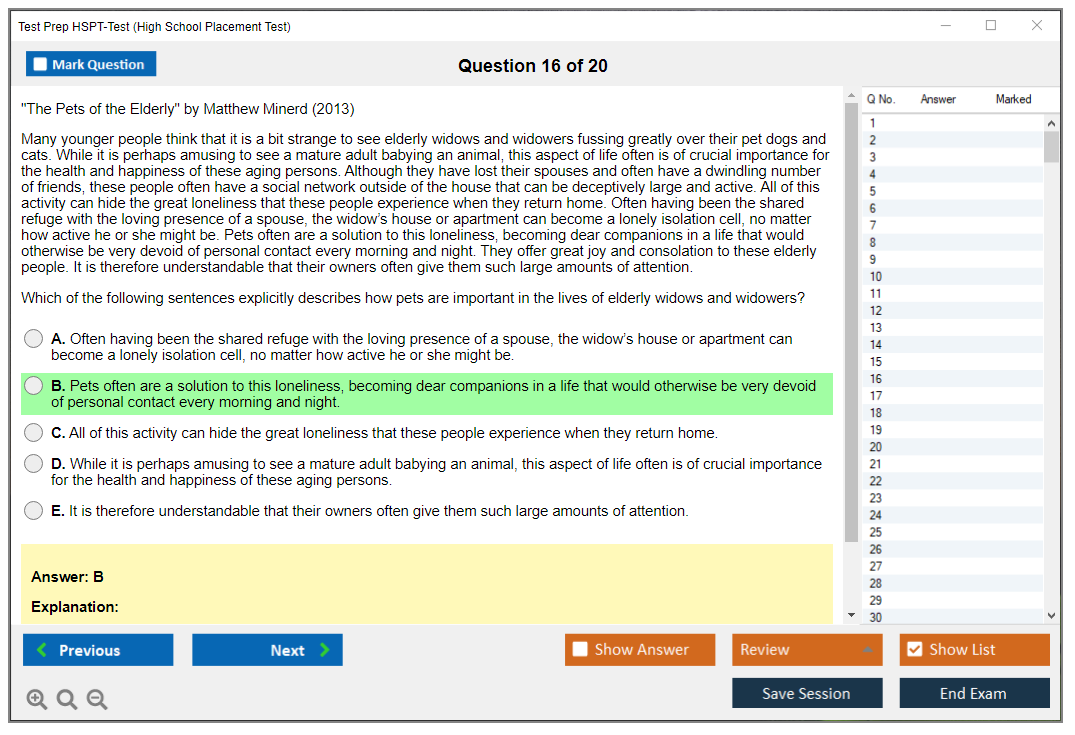
The section includes about 40 comprehension questions and about 22 vocabulary-in-context questions. Passage types include fiction, nonfiction, poetry, and informational texts, with topics across science, history, literature, and social studies.
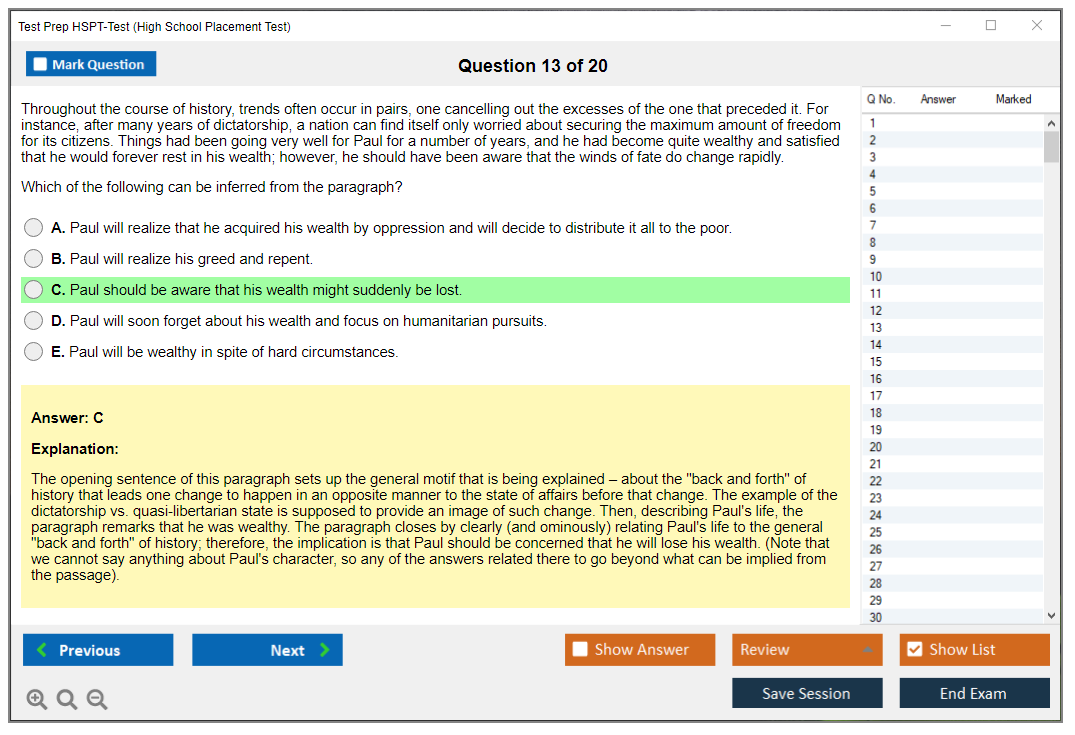
Question types you should expect in HSPT reading comprehension practice: main idea and theme, supporting details, inference and prediction, author's purpose and tone, cause-effect, vocabulary meaning from context.
Fragments work here. Poetry trips kids up. So does dense nonfiction, because the details blur together when you rush, and then every answer choice starts sounding "kind of right," which is exactly what the test wants. Mixed feelings on this section, honestly, because it rewards speed-readers but punishes careful thinkers, and both are valuable skills in real school.
mathematics objectives
Mathematics's more like school math, and it's longer: 64 questions in 45 minutes. It covers arithmetic through pre-algebra and introductory algebra, plus geometry and data interpretation. Calculator's not permitted, so computation accuracy still matters, but this section also rewards planning and not panicking on multi-step word problems.
It usually splits into Concepts (about 24) and Problem Solving (about 40).
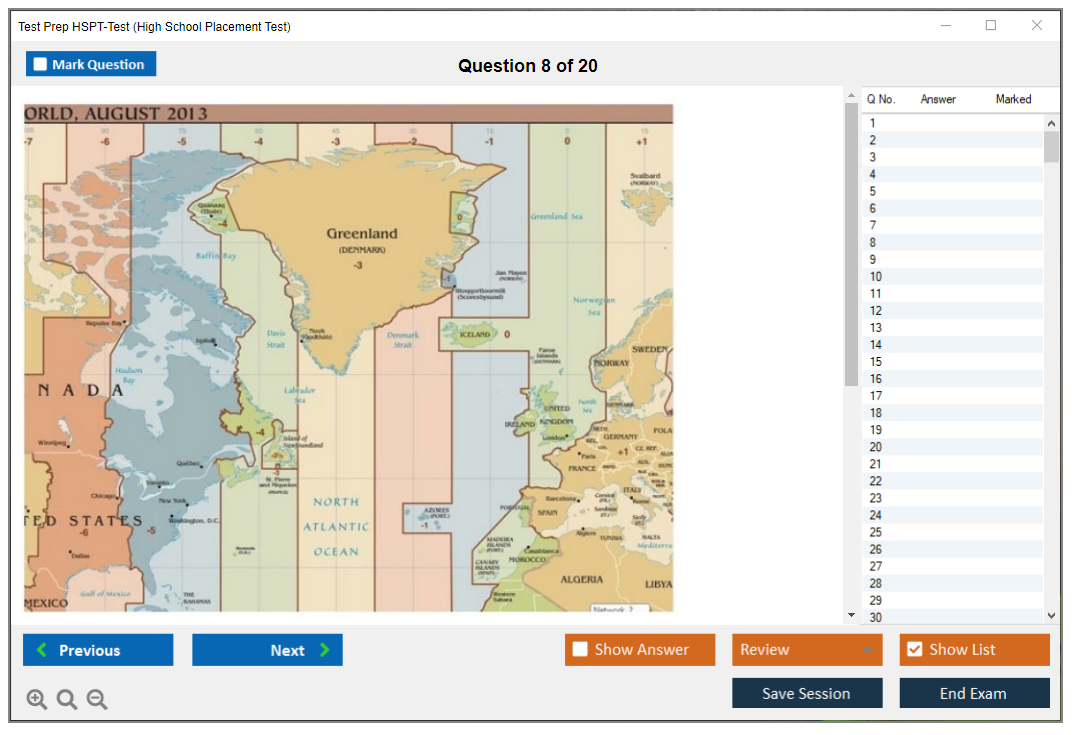
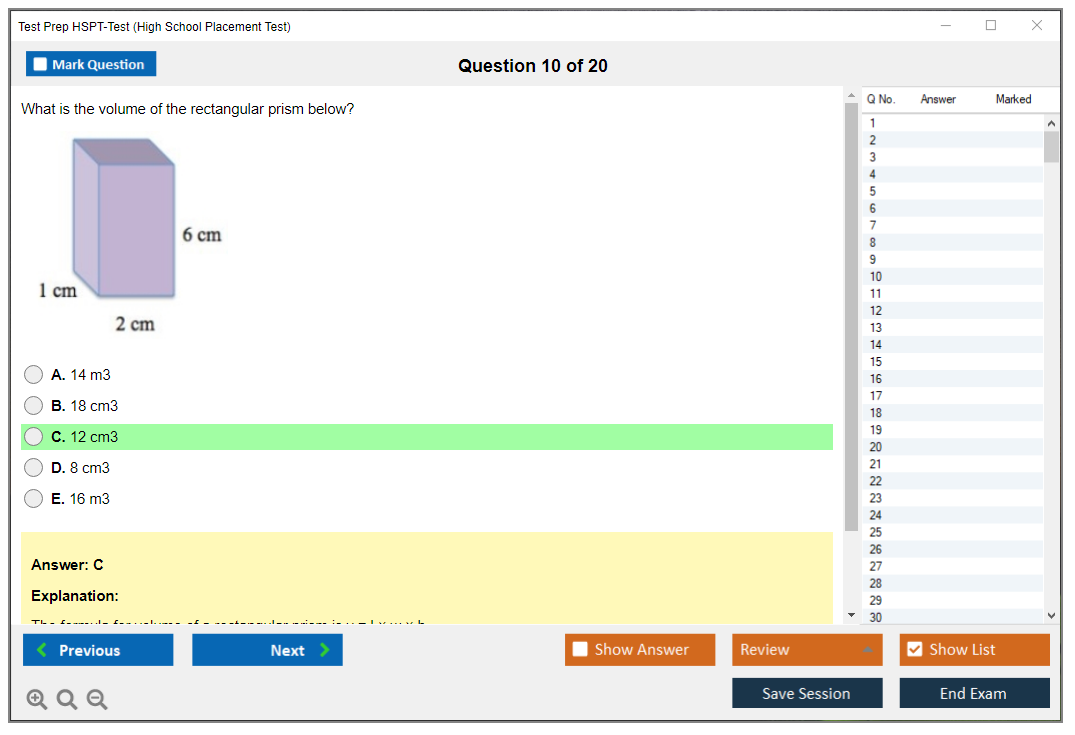
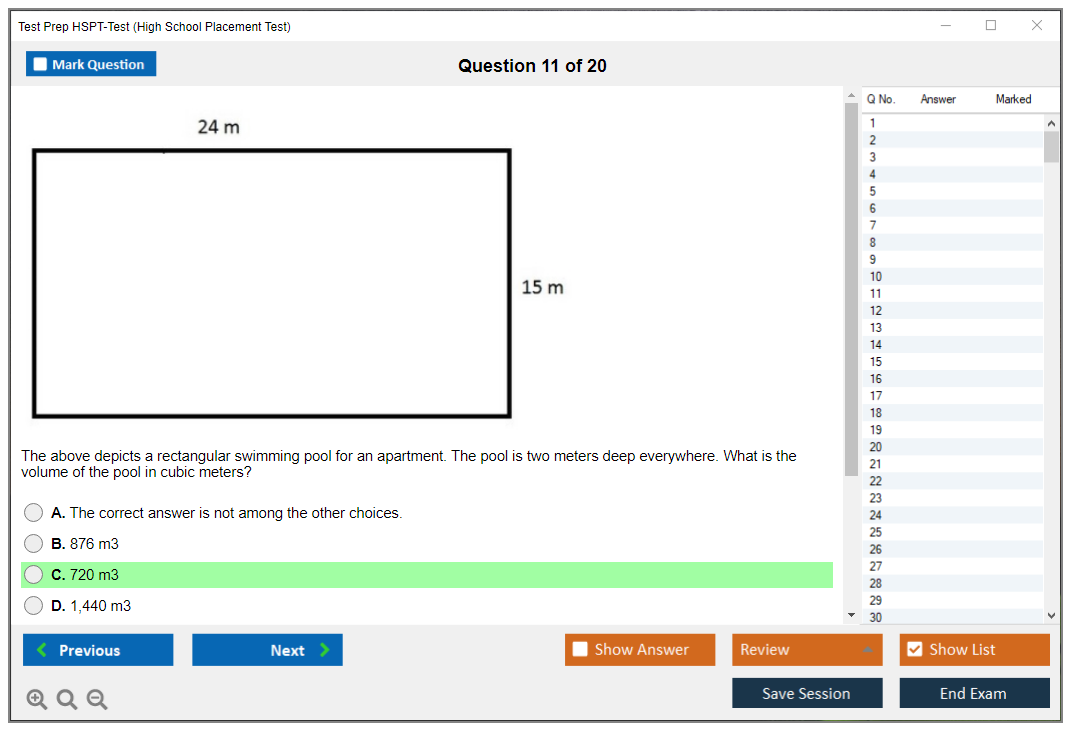
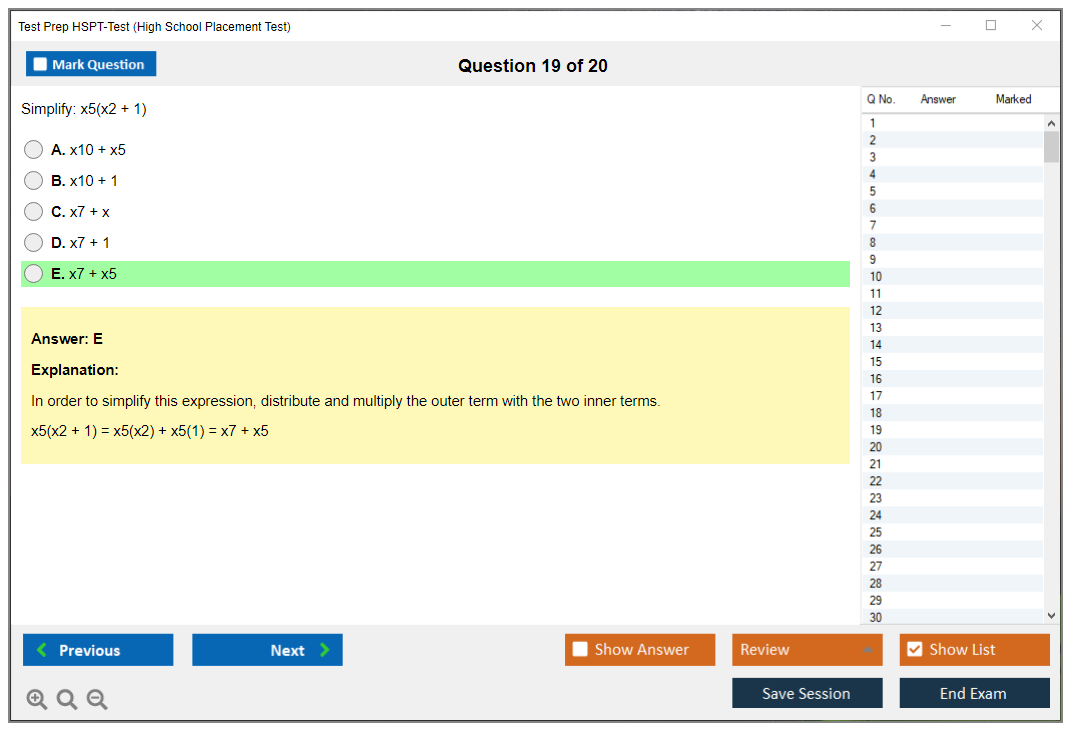
Concepts includes number theory, fractions, decimals, percentages, ratios and proportions, basic geometry like angles, perimeter, area, volume, coordinate plane ideas. Problem solving's where you apply it all, with real-world setups like money, measurement, time, rate, distance. Algebra fundamentals show up too, like solving simple equations, working with variables, simplifying expressions, plus geometry topics like similar figures and the Pythagorean theorem. You'll also see data interpretation with graphs, charts, tables, plus probability and basic statistics.
language objectives
Language's 60 questions in 25 minutes. The objective's practical grammar and writing mechanics through 8th grade, mostly error recognition and correction, not explaining the rule like a worksheet.
You'll see usage (about 12): verb tense, subject-verb agreement, pronouns, sentence context. Spelling (about 10): common middle school words and frequent misspellings. Capitalization (about 8): proper nouns, titles, sentence beginnings. Punctuation (about 12): commas, apostrophes, quotation marks, end punctuation. Composition (about 18): topic sentences, organization, clarity, logical sentence arrangement.
One sentence. Wait, no. This section rewards kids who read carefully and trust their ear for what sounds wrong.
optional sections some schools add
Some schools include Science, Mechanical Aptitude, and Catholic Religion. Science's basic physical, life, and earth science concepts. Mechanical Aptitude's simple machines and spatial relationships. Catholic Religion's Catholic teachings, traditions, and scripture, mainly for Catholic high school entrance exam preparation.
Not all schools administer these. Check your specific school.
cost and registration, quick reality check
HSPT fees are usually handled by the school administering the test, so the "registration" process isn't like the SAT. You typically pay a school-administered fee (often in the few dozen dollars range, but it varies), and the school tells you the date, location, and what to bring. Some schools bundle reporting or scholarship consideration into the fee, and some charge extra if you want scores sent elsewhere.
Policies vary a lot, so confirm test-day rules, arrival time, and whether you can test at multiple schools. I mean, some families try to game the system by testing at three different schools, which is technically allowed but logistically exhausting for an 8th grader.
score requirements and the passing score question
There's usually no official passing score for the HSPT. Schools set their own expectations, and many use percentiles and internal cutoffs for placement or scholarships, which is why "HSPT score requirements" is a school-specific question.
A "good score" depends on the school's applicant pool. Competitive ranges are usually described as higher percentiles, not a single magic number. Scores can be used for admissions decisions, course placement, and scholarship awards, so even if you're confident about getting in, raising the score can still pay off.
difficulty and what trips students up
Compared to the SSAT or ISEE, the HSPT can feel simpler in content but harsher in timing, not gonna lie. Math and reading are where pacing problems show up. Verbal and quantitative are where students with weaker vocabulary or number sense hit a wall.
Common pitfalls: rereading every passage line, doing full calculations on comparison questions, and spending two minutes on one logic item. If you want HSPT test tips and strategies that actually work, it's this: practice skipping and returning, because the test's built for that. It's designed to let you move.
study materials and how to practice
A decent HSPT study guide plus real timed sections beats random worksheets. Prep books are fine, online courses can help if your student needs structure, and tutoring's great when a kid keeps missing the same question type.
Free resources exist, but make sure they match the HSPT style, especially for quantitative comparisons and verbal logic.
practice tests, the right way
Where to find full-length HSPT practice tests. Prep books often include them, and some tutoring companies publish realistic forms. Use them on a schedule: take one early to diagnose, then do timed sections, then take another full test to confirm improvement.
Review matters more than volume. Track mistakes by type, like "analogy relationship wrong" or "inference question rushed," and you'll see patterns fast. Honestly, most improvement happens in review, not in taking test after test.
prerequisites and eligibility basics
This is typically for 8th graders, and the assumed foundation's middle school math through pre-algebra, solid reading fluency, and standard grammar instruction. Accommodations exist at many schools but require documentation, and the timeline for approval can be tighter than parents expect.
retakes and validity
Retake policies depend on the school. Some schools offer only one sitting. Others allow a second date. Scores don't "renew" like a certification, but schools may only accept results from their testing window, so treat each cycle as its own thing.
faq quick answers
how long is the HSPT?
Core sections total a bit under two and a half hours of testing time, plus directions and breaks, and optional sections can add more.
what should i bring on test day?
Pencils, a good eraser, and whatever the school requires for admission paperwork. Bring a simple watch if allowed. No calculator.
how soon are scores available?
It varies by school and testing setup. Some report within a couple weeks, others longer, especially if they batch scholarship decisions with score release.
HSPT Cost and Registration Details
How much does the HSPT actually cost?
Look, HSPT pricing isn't straightforward. The test fee typically runs somewhere between $25 and $60, but honestly, it depends entirely on which school you're testing at and where you live. Unlike standardized tests like the SAT-Test or ACT-Test where you get consistent pricing nationwide, the HSPT's administered by individual Catholic schools and dioceses. They each set their own fees.
I've seen schools in suburban areas charge around $30, while competitive private schools in major cities like New York or Chicago might push closer to that $60 mark. Urban markets with higher operational costs generally mean higher testing fees. Some dioceses coordinate testing across multiple schools in their region, which can actually save families money through consortium testing. You take the exam once and your scores get sent to several participating schools without paying multiple fees.
My cousin's kid took the test at three different schools before they figured out consortium testing was even an option. Would've saved them probably a hundred bucks.
What you're actually paying for (and what you're not)
The basic HSPT fee covers the essentials. You get your test booklet, answer sheet, a proctor to supervise the exam, professional scoring, and one official score report sent to the school where you're testing. Pretty standard across the board.
But extra costs sneak up on families. Need to send your scores to schools that weren't your original testing location? Expect to pay around $10-15 per additional score report. Some schools bundle the HSPT fee right into their application fee, which can be convenient. You're paying one amount and handling both requirements at once. Others keep them completely separate.
Late registration's where schools really get you. Miss the regular deadline and you might face an extra $15-30 in late fees, assuming they even allow late registration at all. Standby testing (showing up without pre-registering) is even more expensive when it's permitted. Most schools don't offer this option for the HSPT though.
Something families often forget: the prep materials aren't included. You're buying those separately, whether that's study guides, online courses, or private tutoring. Our HSPT-Test Practice Exam Questions Pack runs $36.99 and gives you realistic practice questions that mirror the actual exam format. Way more affordable than most tutoring options. The application fee for the high school itself is also separate from testing, sometimes running $50-100 depending on the school.
Not gonna lie, some schools do offer fee waivers for families demonstrating financial need. You'll need to provide documentation, but it's worth asking the admissions office about if cost's a barrier.
Getting registered and what happens on test day
Registration's honestly more complicated than it should be because there's no centralized system like you'd find with the ISEE or other entrance exams. Each school handles their own process through their admissions office or website. Most schools open registration in late summer or early fall for testing that happens between October and January.
Deadlines typically fall 2-4 weeks before the actual test date. You'll need basic information: your student's full legal name (exactly as it appears on their ID), date of birth, current school, and contact details. Some schools require you to submit at least a partial application before they'll let you register for the HSPT. Adds another layer of complexity to the timeline.
You should get email confirmation once you're registered. Critical details like the exact testing location, date, time, and what to bring. Save that email. Print it if you're old school like me.
Test day requirements? Pretty straightforward but strict. Students need valid photo ID or school ID. No exceptions. Bring several #2 pencils with good erasers because mechanical pencils usually aren't allowed. And here's a big one that trips people up: calculators are NOT permitted on the HSPT. None whatsoever, so don't even pack one.
Arrive 15-30 minutes early because late arrivals often aren't admitted, and that's your testing fee down the drain. No electronic devices allowed in the testing room. That includes phones, smartwatches, fitness trackers, all of it. Testing centers are serious about this. I've heard stories of students getting dismissed for having a phone in their pocket even when it was turned off.
Accommodations and special circumstances
If your student has documented disabilities and needs testing accommodations, you absolutely must request those during the registration process. Schools need supporting documentation from medical professionals or educational specialists, and processing these requests takes time. Don't wait until the week before the test. Submit accommodation requests as early as possible, ideally when you first register.
Cancellation and refund policies? They vary wildly by school. Some institutions offer partial refunds if you cancel with sufficient notice. Others have strict no-refund policies once you've registered. Check the specific school's requirements before you pay.
Weather-related cancellations do happen, especially for winter testing dates in certain regions. Schools'll notify registered families and reschedule the exam, but it can throw off your admissions timeline if you're cutting deadlines close.
Comparing costs to other entrance exams
When you stack the HSPT against other standardized admissions tests, it's actually pretty affordable. The SSAT runs around $127 for the standard test, and the ISEE's similarly priced. Even the PSAT-Test, which many students take as practice for college admissions, costs about $18. And that's subsidized by schools.
The HSPT's lower price point reflects its more limited scope and school-based administration model. You're not paying for elaborate testing centers or nationwide infrastructure. Just a classroom, a proctor, and scoring services.
Smart strategies for managing costs
If you're testing for multiple schools, definitely look into consortium testing options in your diocese. Taking one exam that counts for three or four schools beats paying separate fees at each institution. The thing is, some families don't realize this option exists until after they've already registered for multiple individual test dates.
Start budgeting early. Costs add up. Testing fees, prep materials like the HSPT-Test Practice Exam Questions Pack, application fees for each school, and potentially additional score report fees. A family applying to three Catholic high schools might easily spend $300-400 total when you factor everything in.
Also, ask admissions offices directly about fee waivers and financial assistance programs. Many schools have funds specifically designated to help families cover testing and application costs. They won't advertise this loudly, but it's there if you ask.
The registration process might seem fragmented compared to more centralized exams like the GRE-Test or MCAT-Test, but once you understand that each school operates independently, it makes more sense. Just stay organized, mark deadlines clearly, and read each school's specific requirements carefully because they really do differ.
HSPT Passing Score and Score Requirements
The HSPT's a standardized admissions test. Eighth graders take it for Catholic high schools: admissions, placement, scholarships, the whole deal. But here's the thing, it's not like the SAT where there's one rulebook saying "pass" or "fail." Each school decides what matters.
Adults make it sound mysterious, but honestly? It's just a timed aptitude test with a predictable structure, and good HSPT test prep mostly comes down to getting comfortable with the clock, the question styles, and how to read that scoring report without panicking.
who takes the hspt and why it matters for admissions
Mostly eighth graders. Sometimes scholarship applicants take it at specific test events too. Why's it matter? Simple: many schools use it as a filter, a sorter, or a tie-breaker when the applicant pool's packed and they can't admit everyone who looks decent on paper.
Some schools treat it as the main datapoint for deciding who gets in and who doesn't. Others treat it like supporting evidence next to grades, recommendations, interviews, and extracurriculars. Depends on the building. Depends on the year. Depends on how many families are fighting for limited seats.
hspt format, sections, and timing overview
The core HSPT usually includes Verbal Skills, Quantitative Skills, Reading, Mathematics, and Language. Some schools tack on optional sections like Science, Mechanical Aptitude, or Catholic Religion. Timing's tight. That's the whole game, really.
Short sections. Fast decisions. No calculator. And pacing, I mean, that's the difference between "I knew this stuff" and "I ran out of time and guessed on twelve questions."
hspt objectives (what the test covers)
quantitative (math) objectives
This is the quantitative and verbal reasoning prep side. You'll see number operations, algebra basics, geometry basics, and word problems that test whether you can think logically under pressure. The Quantitative section can feel more logic-ish, while the Math section feels more classroom-ish. If you're doing HSPT math practice, do plenty of word problems under time pressure. That's where points leak for most students.
Synonyms, analogies, logic-based verbal questions. This is where HSPT verbal skills practice pays off fast because patterns repeat, and you can learn the "test language" even if you're not a huge reader or vocabulary nerd.
Passages, main idea, inference, detail questions. Pretty standard reading comp stuff. What's not standard is the pace, so HSPT reading comprehension practice should include skimming tactics and question-first approaches to see what sticks for you before test day arrives and you're sweating through a passage about 19th-century agriculture.
Grammar rules. Punctuation. Sentence structure. Usage. This is the most teachable section for a lot of students because rules are rules. They don't change based on how you feel that day. A decent HSPT study guide plus drills can move this score quickly if you're willing to actually memorize the comma rules instead of guessing.
optional sections (if applicable at certain schools)
Science, mechanical aptitude, religion. Not every school uses them. Ask the school directly. If they count it, prep it. If they don't, don't burn weekends on it.
typical hspt test cost (school-administered fees)
Most often the school collects the fee, and it's commonly around $20 to $60 depending on location and whether they're bundling it with other admissions stuff. Sometimes it's bundled with an application fee, so you pay once and you're done.
what's included in the fee and potential additional costs
Usually the test, scoring, and reporting to that school. Extra score reports, late registration, or special testing sessions can add cost. Tutoring and paid materials are the real "extra," obviously. That's where families can spend hundreds or even thousands if they're not careful.
registration steps and test-day policies (varies by school)
Registration's typically through the school's admissions page. Policies vary a lot. Some schools require you to test on their campus. Some offer multiple dates. Some have strict ID rules or won't let you bring a phone into the building. Read the email they send. Print it. Bring it. Don't assume anything.
how score requirements actually work
Here's the part everyone asks about. And the part schools rarely explain cleanly because, honestly, it's complicated and they don't want to scare off applicants.
is there an official passing score?
No. No universal "passing" score exists for the HSPT across all schools. There isn't a statewide cutoff. There isn't a national cutoff. The test uses a scaled scoring system rather than a pass/fail designation, so the whole "passing score" idea is mostly a myth that gets repeated in parent Facebook groups where someone heard something from someone's cousin who tested in 2017.
Each main section's scored separately on a scale of about 200 to 800. Wait, that's a huge range, right? Then a composite score is calculated by averaging the section scaled scores together. You'll also see national percentile ranks, which compare your performance to a national norm group, and local percentile ranks, which compare you to students in the same geographic area or diocese. Different comparisons tell different stories.
Grade equivalents show performance relative to typical grade levels, which people love to misread and panic over. And the Cognitive Skills Quotient (CSQ) shows up too: an IQ-like measure of academic aptitude with a mean of 100 and a standard deviation of 16. Useful data. Also easy to overreact to if you don't understand what it's actually measuring.
Schools set their own minimum HSPT score requirements based on what they want, how hard their classes are, and how competitive the applicant pool is that year. That's why the only real answer is, "Ask the school what scores they usually see for admitted students," and then do the best prep you can instead of obsessing over some magic number.
what score ranges are considered competitive
Nationally, the average composite score's roughly 500 to 550 on that 200 to 800 scale. If you're around there, you're in the middle of the pack. Fine. Normal. Not exciting, but not disqualifying either.
Highly competitive Catholic high schools often want students at the 75th percentile or higher. That tends to map to a composite around 600+, give or take depending on the year and the school's reputation. Moderately selective schools are commonly in the 50th to 75th percentile range, so maybe 500 to 600. Less selective programs or guaranteed admission pathways may accept below the 50th percentile, especially if grades and recommendations are strong and they like your interview vibe.
Scholarships are where it gets spicy. Top-tier scholarship consideration's usually 90th percentile or higher, often around 650+ composite, because schools have limited merit money and they want to give it to students who'll make them look good in their annual reports. And those 99th percentile scores, sometimes around 750+, are rare and basically signal exceptional academic preparation and great test-day execution under pressure.
One more thing people miss: individual section scores matter for placement even if your composite is just "good." A high Math score can get you honors math placement regardless of the overall composite, and strong Reading or Verbal can influence English track decisions when they're building freshman schedules in the spring.
Percentile ranks are usually more meaningful than staring at scaled numbers. Percentiles tell you how you stack up against other testers, not against some abstract scale that doesn't mean much without context.
Also? Score requirements increase in competitive markets with many qualified applicants fighting for the same seats. Urban areas can be brutal. Rural areas sometimes have more breathing room. Same test, different reality depending on zip code.
I remember my cousin tested in Chicago back when slots were tight. Kid had solid grades, decent recommendations, did the whole interview circuit. But his HSPT was middling, and two schools flat-out told his parents they couldn't take anyone below the 70th percentile that year because they had too many applicants. Same kid would've walked into admission at a school two counties over where the pool was smaller. Geography's weird like that.
how hspt scores are used (admissions, placement, scholarships)
Schools use HSPT scores for four big purposes, and it's worth understanding all of them instead of just fixating on "did I get in or not."
Admissions decisions: They may rank applicants numerically. Set minimum thresholds to eliminate students who don't meet academic expectations. Or, and this is becoming more common, use the score as one part of a broader review with grades, interviews, recommendations, and activities all mixed together. Limited seats change everything about how schools weight this stuff.
Class placement and tracking: This is the practical one that affects your actual freshman year experience. High math scores can place a student into accelerated algebra or geometry as a freshman instead of repeating pre-algebra. Reading and verbal scores push English placement up or down, determining whether you're in honors or regular sections.
Scholarship awards: Merit aid's often tied directly to percentiles in a way that's almost mechanical. Some schools literally publish automatic scholarship thresholds, like 90th percentile equals half tuition, no questions asked. Others run competitive scholarship programs that require a separate application plus strong scores, and you're competing against other high scorers for limited awards.
Diagnostic purposes: Advisors use score profiles to spot strengths and weak areas and recommend course loads, support services, or summer work before you even start ninth grade.
understanding your score report
You usually won't see raw scores, how many you got correct, even though that's what the test starts with. Those get converted into scaled scores on the 200 to 800 range for each section. The composite score's the average of the section scaled scores, which sounds simple but confuses people when one section tanks and drags everything down.
Then come the comparison metrics: national percentile rank, local percentile rank, grade equivalent, and the CSQ. Score reports are typically available about 2 to 3 weeks after testing, though some schools move faster if they're using electronic reporting systems. Schools often get detailed reports with every subscale broken out, while families might receive a summary or the full report depending on school policy. Ask. Don't assume you'll automatically get everything.
how difficult is the hspt?
difficulty by section (math vs reading vs verbal vs language)
Math feels hard if fundamentals are shaky or you never learned fractions properly. Reading feels hard if pacing's bad and you spend four minutes on one passage. Verbal feels hard if you've never practiced analogies and you're seeing that question format for the first time on test day. Language feels hard if you guess grammar rules from vibes instead of actually knowing when to use a semicolon.
time pressure and pacing challenges
Time's the real opponent. The questions aren't college-level difficulty. The clock is mean, though, and it doesn't care that you "almost" finished. Do timed drills early in your prep, not the week before, so your brain learns what 45 seconds per question actually feels like.
common pitfalls and how to avoid them
Overthinking easy questions. Getting stuck on one hard problem and losing three minutes. Leaving blanks because you're not sure. Treat it like a points game where every question's worth the same and moving on fast is a skill you practice. Use HSPT test tips and strategies like skipping and returning, and practice guessing rules that fit the test format instead of random panic guessing.
hspt study materials (best resources)
best hspt prep books and study guides
A solid HSPT study guide plus timed practice sets is enough for most students who are self-motivated and organized. Pick one book and finish it completely. Don't collect five different books and do none of them because you're paralyzed by choice.
online courses and tutoring options
Tutors help when a student's stuck, unmotivated, or needs structure and accountability they can't create themselves. Courses help when you want a schedule laid out and you'll actually follow it. Either way, make sure you're doing real timed sections under realistic conditions, not just watching videos passively and calling it "studying."
free study resources and worksheets
Some schools provide sample questions on their admissions pages. There are also free worksheets floating around online, but quality varies wildly and some are outdated or not aligned to the current test format. Use free stuff for extra reps and concept review, not as your main plan.
what to study first (high-impact topics)
Start with the sections where you can gain points fast and build confidence early. Grammar rules you can memorize. Common math topics like percents and ratios. Analogy patterns that repeat. Then add full timed practice sets once you've plugged the obvious content gaps.
hspt practice tests (how to use them effectively)
where to find realistic full-length hspt practice tests
You want realistic timing and section mixes that actually match test day, not random question dumps that might be from different tests entirely. A good option's the HSPT-Test Practice Exam Questions Pack because it's focused on exam-style questions without you hunting across random sources for hours and wondering if what you found is even accurate. If you're building a simple High School Placement Test prep routine, having everything in one place matters more than people admit, especially when you're juggling school, sports, and everything else.
practice test schedule (2 to 6 week plans)
Two weeks: 2 full tests plus targeted drills on your worst sections. Four weeks: 1 test per week, review hard, drill weak sections midweek, track improvement. Six weeks: alternate section work and full tests, then tighten pacing in the final two weeks.
how to review mistakes and track weak areas
Don't just mark wrong answers and move on. Write why you missed it: content gap, misread the question, or ran out of time. Then build targeted drills around that category so you're not making the same mistake on test day.
timing drills and section-by-section practice
Do short sprints first. Ten minutes on Verbal. Then twenty on Math. Then full sections once you've built stamina. That's how pacing becomes automatic instead of something you're constantly stressing about.
prerequisites and eligibility
grade level and typical test-taker profile
Mostly eighth grade students applying to Catholic high schools for freshman admission. Some seventh graders testing early for special programs or accelerated pathways, but that's less common and usually requires school permission.
required coursework or skills (recommended foundations)
Pre-algebra comfort, basic geometry concepts, solid grammar foundation, and the ability to read for meaning quickly without getting lost in dense paragraphs. If any one of those is weak, your HSPT score requirements target gets harder to hit regardless of how many practice tests you take.
accommodations and documentation (if applicable)
Schools can offer extended time or other accommodations for students with documented learning differences, but you'll need official documentation and you need to request it early. Like, way before test day, not the week before when you're panicking.
hspt prep strategy and study plan
1-week cram plan (if limited time)
One full HSPT practice test to see where you stand. Review errors carefully and identify your two worst sections. Drill those sections daily with timed sets. Sleep properly the night before. Don't cram new content the last day. Just review what you've practiced.
4-week structured plan
Two days content review for each section. Two days timed practice sections. One day error review and tracking patterns. Weekend full practice test. Repeat the cycle weekly and adjust based on what you're still missing. If you need a clean question source for this weekly rhythm, the HSPT-Test Practice Exam Questions Pack fits nicely into that structure without overwhelming you with too many different resources.
8-week mastery plan
More full tests spread out. More tracking of trends and patterns. More focus on pacing and accuracy together instead of sacrificing one for the other. It's slower, but scores usually move more dramatically when you have time to actually internalize strategies.
test-day checklist, guessing strategy, and pacing
Bring pencils, multiple, sharpened. A watch if the room allows it and you don't trust the clock. Snacks for after testing. Whatever ID the school requires in their instructions. Guess strategically when you must. Don't leave blanks if there's no penalty. Move on fast when you're stuck instead of burning time you need elsewhere.
renewal and retake policy (what to know)
does the hspt require renewal? (validity considerations)
No renewal like professional certifications. HSPT scores don't expire in a technical sense. But scores are typically only relevant for that specific admissions cycle. Schools aren't going to accept a score from two years ago when you were in sixth grade.
can you retake the hspt and how schools handle retakes
Some schools allow retakes on alternate test dates, some don't allow retakes at all, and some will only accept the first sitting regardless of how much you improved the second time. Ask admissions directly. Don't assume. If they do allow retakes, only do it if you can prep differently and address what went wrong the first time, not just "try again" with the same approach.
when to retake vs focus on other admissions requirements
If your score's close to the school's typical admitted student range, like within 20 or 30 points, retaking can help push you over. If you're far off and other parts of your application are weak, improving grades, interviews, and recommendations might move the needle more than obsessing over test scores alone.
faq (quick answers)
Typically around 2.5 hours total. Depends on optional sections and the school's schedule. Some schools give breaks. Some don't.
###
Look, I'm not gonna sugarcoat this. The HSPT is definitely challenging, but it's not some impossible monster test. It's designed specifically for 8th graders applying to private or Catholic high schools, which means the content itself shouldn't be wildly beyond what you've learned. That said, plenty of students find it tough, and understanding exactly why can help you prepare smarter instead of just harder.
The test covers material through pre-algebra and advanced middle school curriculum, so if you're in a typical 8th-grade class, you've theoretically seen most of this stuff before. But here's the thing: there's a massive difference between having learned something in 6th grade and being able to recall and apply it under pressure two years later. The HSPT is cumulative. You're being tested on eight-plus years of academic learning compressed into under three hours, which honestly feels pretty intense when you're sitting there with a timer ticking.
Why the clock is your biggest enemy
Time pressure.
That's what trips up most students, not the actual content.
You're looking at an average of 30-45 seconds per question across the different sections, and some sections are way tighter than that. The Verbal Skills section? You get 16 minutes for 60 questions. Do the math. That's roughly 16 seconds per question. Not 16 seconds to think about it, but 16 seconds total including reading the question, processing what it's asking, and bubbling in your answer. That's insane.
Since there's no penalty for guessing (which is great!), you might think the pressure's off a bit. But actually, it just shifts the challenge. Now you need killer time management skills because leaving blanks isn't strategic. You should guess on everything. But strategic guessing while maintaining accuracy on questions you actually know? That requires practice and mental discipline most middle schoolers haven't developed yet.
The breadth of content means you can't just be good at math or strong in reading. You need to be well-rounded academically, which is tough for students who have clear strengths and weaknesses. Plus, some question formats might be totally new to you. If you've never seen an analogy question before or worked with number series patterns, you'll struggle initially even if you're academically strong.
Breaking down each section's specific challenges
The Verbal Skills section is moderately difficult, especially if you haven't been exposed to a lot of vocabulary through reading. I mean, analogies require you to think abstractly about relationships between words, which is a different skill than just knowing definitions. Logic questions can be really tricky without practice because they test reasoning patterns you might not use in typical schoolwork.
And that time crunch I mentioned?
Sixteen seconds per question is brutal. You need to work fast without panicking, which is easier said than done when you're 13 years old taking a high-stakes test.
Quantitative Skills challenges students who've learned to rely heavily on algorithms and step-by-step procedures rather than developing number sense. This section rewards mathematical intuition and mental math ability. Pattern recognition requires different thinking than what you do in typical math class, where you're usually applying formulas to solve specific problem types. The geometric comparison questions frustrate some students because you can't just calculate. You need to visualize and reason about shapes and quantities.
Reading is moderate difficulty, but again, time is the primary challenge. You get 25 minutes for 62 questions, which means approximately 20-25 seconds per question PLUS the time you need to actually read the passages. Passage complexity ranges from pretty accessible to legitimately challenging, so you need to read efficiently while maintaining comprehension. Skimming too much and you'll miss details. Reading too carefully and you'll run out of time. Finding that balance takes practice.
The math and language sections have their own quirks
Mathematics difficulty varies widely based on your coursework. Students in pre-algebra or algebra will generally find it manageable. Those still working primarily with arithmetic might struggle with the algebra questions, which definitely appear on this test. You get 45 minutes for 64 questions, which allows more time per question than other sections, but the problems themselves are more complex and multi-step. Word problems require careful reading and planning. You can't just grab numbers and start calculating.
My brother used to do that actually, just scan for numbers and start multiplying whatever he saw. Drove his teachers crazy. He bombed every word problem until seventh grade when Mr. Patterson made him underline the actual question being asked before he could touch his pencil to the work area.
Language is generally considered the easiest section for students with strong English skills. It tests editing and proofreading rather than asking you to produce original writing, which is way less stressful. Time pressure is moderate: 25 minutes for 60 questions. If you have a solid grammar foundation from school, you'll find this section pretty straightforward. But if grammar rules weren't emphasized in your curriculum, you might struggle more than you'd expect.
Common mistakes that tank scores
Overthinking questions is huge.
Your first instinct is often correct, especially on the verbal sections where you're working with patterns and relationships. Students who second-guess themselves constantly waste precious time and often change right answers to wrong ones. Practice trusting your initial answers on questions you complete within the time limits.
Poor time management means spending too long on difficult questions early in a section, then rushing through easier questions later or leaving them blank entirely. I've seen students spend three minutes wrestling with one hard problem, then run out of time with ten questions left, some of which they definitely could've answered. Use the process of elimination when you can, but if a question is eating up time, make your best guess and move on. Honestly, you can always come back if there's time at the end. Wait, who am I kidding, there usually isn't.
Not practicing with timed conditions is a critical mistake. You might know all the content perfectly but still bomb the test because you've never developed the pacing skills needed to work this quickly. Untimed practice helps you learn material. Timed practice helps you perform under pressure. You need both, but especially the latter as test day approaches.
Failing to skip strategically causes problems too. Some students feel compelled to answer every question in order, getting stuck on hard ones. Others skip too liberally and then forget to go back. The sweet spot is skipping questions that would take more than about double the average time per question, marking them clearly, and returning only if time permits.
Not using HSPT practice test materials effectively means you're not learning from your mistakes. Taking practice tests is good. Reviewing them thoroughly to understand why you missed questions and identifying patterns in your errors is what actually improves your score. Track which sections and question types give you trouble so you know where to focus your study time.
Students sometimes neglect vocabulary building, which hurts them on Verbal Skills. You can't cram vocabulary the night before, but consistent exposure to new words over several weeks makes a real difference. Reading challenging material, using flashcards, or working through vocabulary lists from SAT-Test prep materials (which cover many of the same roots and patterns) all help.
The thing is, the HSPT is comparable to other standardized admissions tests for 8th graders like the ISEE, though each has unique quirks. What makes it challenging isn't that the content is impossibly hard. It's that you need to demonstrate mastery of a broad curriculum while working very quickly and maintaining accuracy. With focused preparation on both content review and pacing strategies, most students can perform well. But going in cold or assuming your regular schoolwork has fully prepared you? That's usually a recipe for disappointment.
Conclusion
Getting your HSPT prep right actually matters
Honestly? I've watched countless eighth graders completely lose it over this test in ways that just don't make sense. Some procrastinate until seven days out, freak out entirely, then can't figure out why their Catholic high school entrance exam preparation fell apart so spectacularly. Others grind through months of random worksheets that bear zero resemblance to what actually appears on test day.
What really works for HSPT test prep: you've gotta have real practice questions, not some watered-down generic middle school review material that sort of looks close enough. The quantitative and verbal reasoning prep sections? That's where most students absolutely eat it. Not because the content itself is rocket science, but because the format blindsides them completely. When's the last time your kid tackled 64 verbal analogies consecutively?
Yeah, never.
Biggest mistake? Treating this like a regular school test.
It's not remotely the same. This is a timed aptitude test practice for middle school students that demands strategy equally as much as content knowledge. Maybe more. You could memorize every math formula in existence but still completely tank the HSPT math practice section if your pacing's a disaster. Same deal with HSPT reading comprehension practice. It's way less about actual reading ability and way more about reading efficiently when you're under serious time pressure.
My cousin's kid spent three months drilling vocabulary flashcards, thought she had it locked. Bombed the verbal section anyway because she'd never practiced the actual analogy format under time constraints. Brutal lesson.
A decent HSPT study guide helps some, sure, but nothing beats actual practice exams. Full-length ones specifically. The kind that replicate real test conditions precisely and expose exactly where you're bleeding points left and right. Most students legitimately need at least 4-6 complete practice runs to get truly comfortable with the timing and question styles, though some might need more depending on their starting point and HSPT score requirements for their target schools.
If you're really serious about boosting your shot at scholarship exam prep for high school admissions, check out the HSPT-Test Practice Exam Questions Pack. It's got realistic question formats and explanations that actually help you grasp why wrong answers are wrong. Not just that useless "study harder next time" garbage advice that helps nobody.
Bottom line: start early, practice with authentic HSPT practice test materials, and don't skip the review process under any circumstances. Your future high school (and potentially serious scholarship money) depends on it. Not gonna lie, students who commit to focused prep work consistently demolish those who just wing it, even when the "winging it" kids are objectively smarter on paper. Preparation absolutely crushes raw talent when the stakes are this specific.

